
Gum disease – Periodontics
Tafur Dental Clinic.
Periodontics deals with the tissues that surround and hold the teeth, the periodontium. The gum and bone are part of the periodontium and are sometimes affected by infectious problems caused by plaque and tartar. Prevention is the best cure for gum disease.
Free consultation with our dentist at Tafur dental clinic in Gibraltar.
Symptoms of Gum Disease
Common symptoms of gum disease include bleeding gums (sangrado de encías) , bad breath, gum recession and increased tooth sensitivity. When the gums recede, the root surface of the tooth may become exposed, which can lead to discomfort when consuming hot or cold foods.
If you are experiencing these symptoms, early diagnosis is essential to prevent progression. You may also find it helpful to read our guide on tooth sensitivity and when professional treatment is needed .
If you are experiencing symptoms of gum disease, it is important to visit a dentist in Gibraltar for early diagnosis and treatment.Understanding gum disease
Gum disease often develops gradually. Understanding its causes and early signs helps prevent long-term damage to the gums and supporting bone.
Why does gum disease happen?
Gum disease begins when bacteria accumulate around the teeth and gums, leading to inflammation that can gradually damage gum tissue and bone. Plaque is the main trigger, but several factors can increase the risk.
- Smoking
- Stress
- Alcohol consumption
- Malnutrition
- Age-related changes
- Systemic conditions such as diabetes
Symptoms of gum disease
Early gum disease (gingivitis) commonly causes redness and bleeding when brushing. As it progresses, symptoms may include sensitivity, bad breath, and gum recession. Many patients feel little or no pain, which is why professional assessment is important.
- Bleeding gums when brushing or flossing
- Red, swollen, or tender gums
- Persistent bad breath (halitosis)
- Cold sensitivity
- Gums pulling away from the teeth
The two most common diagnoses are gingivitis and periodontitis.

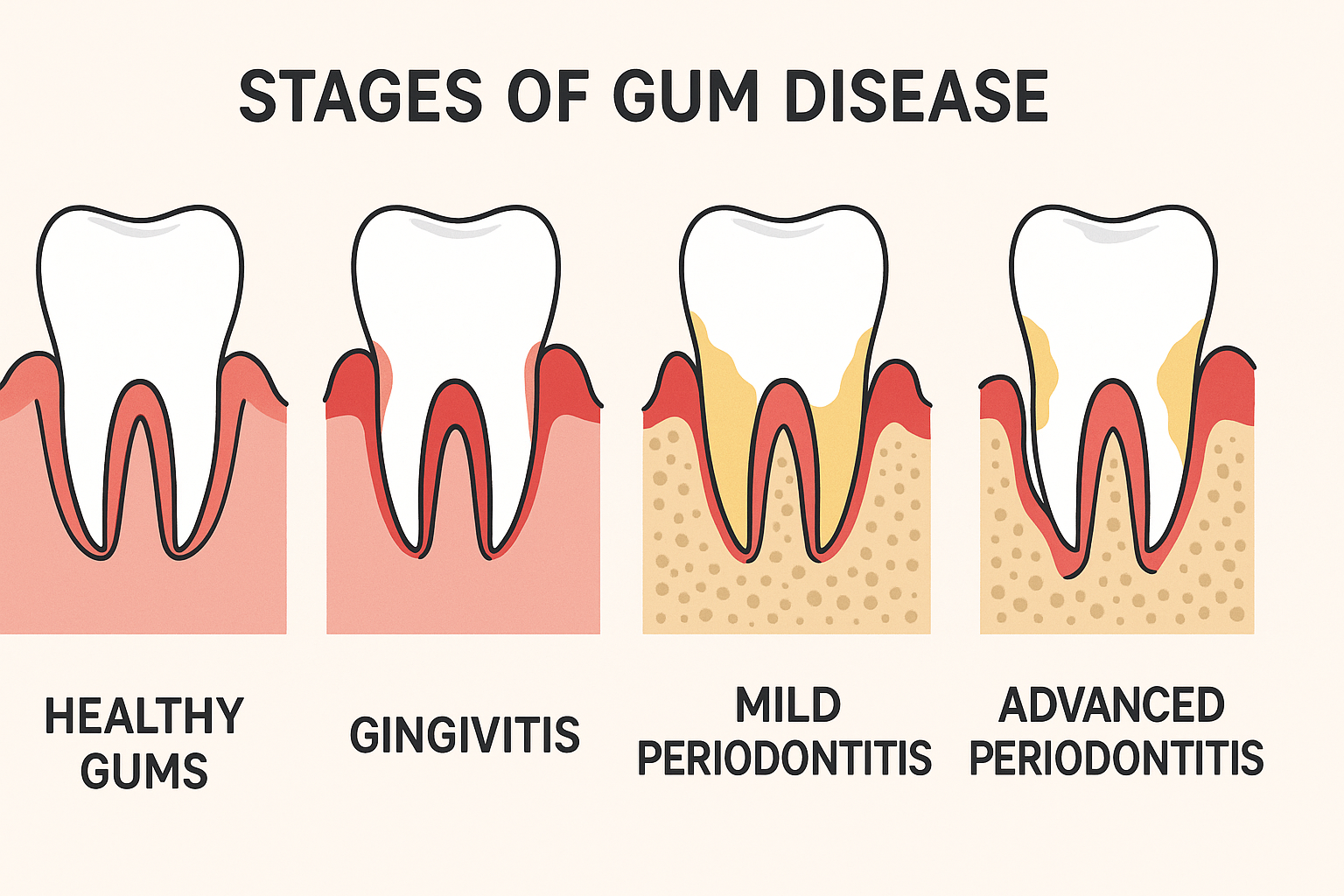
Stages of gum disease
Healthy teeth
Gums are firm, pale pink, and fit snugly around the teeth.
No bleeding when brushing or flossing.
Bone and connective tissues are intact, holding teeth securely in place.
Gingivitis (Early Stage)
- Caused by plaque buildup along the gumline.
- Gums become red, swollen, and may bleed during brushing or flossing.
- At this stage, no bone loss has occurred, and damage is reversible with proper dental care.
Mild gum disease
Plaque hardens into tartar and extends below the gumline, creating pockets where bacteria thrive.
Gums start pulling away from the teeth.
Early bone loss begins, making teeth slightly less stable.
Inflammation becomes more severe and is no longer reversible, but it can be controlled.
Advanced Periodontitis
Deep gum pockets, significant gum recession, and severe bone loss.
Teeth may loosen, shift, or even fall out.
Chronic infection can spread, affecting overall health (linked to diabetes, heart disease, etc.).
Requires advanced treatment, such as deep cleanings, surgery, or implants if teeth are lost.
Treatment options for gum disease
Treatment depends on the stage of gum disease and the condition of the bone and gums. We’ll confirm the best approach after an examination.
Curettage (deep cleaning)
Professional cleaning below the gum line to remove plaque and tartar from periodontal pockets. Often the first step to reduce inflammation and bleeding.
- Scaling and root planing
- Home-care guidance
- Review and maintenance plan
Membrane / bone regeneration
In selected cases with bone loss, regenerative techniques may help stabilise the supporting tissues. This can include membranes and biomaterials to support healing.
- Case-dependent (not for everyone)
- Used to support tissue healing
- Planned after scans and periodontal assessment
Gingivectomy
When deep pockets persist or excess/infected gum tissue needs removal, gingivectomy can help improve gum contours and make cleaning easier.
Learn about gingivectomy →What are the early signs of gum disease?
Bleeding when brushing or flossing, red or swollen gums, bad breath and gum recession. If you notice these, book an assessment.
What’s the difference between gingivitis and periodontitis?
Gingivitis affects the gums and is reversible with professional cleaning and home care. Periodontitis involves bone loss and needs deeper treatment and ongoing maintenance.
Does treatment hurt?
Deep cleaning is done under local anaesthesia. You might feel pressure and temporary sensitivity afterwards, which usually settles quickly.
What is scaling and root planing (deep cleaning)?
A thorough clean below the gums to remove plaque and tartar from tooth roots, helping inflammation resolve and gums reattach.
How do I stop it from coming back?
Excellent brushing and flossing, quitting smoking, controlling diabetes and attending periodontal maintenance every 3–6 months.